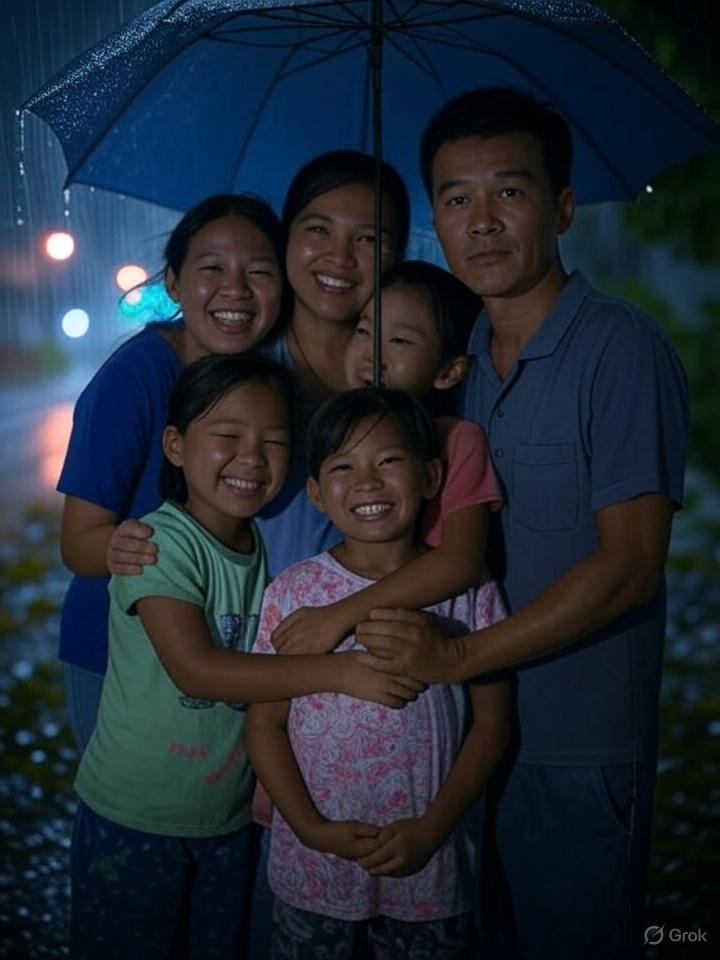
In the Philippines of my childhood, “all classes suspended” was a triumphant anthem. Typhoon season sparked a peculiar thrill for kids like me, born in the 70s, raised in the 80s, and tumbling into adolescence in the 90s. You could feel the storm’s approach—the air thickened, heavy with the scent of wet earth, as charcoal clouds swallowed the horizon. Life pulsed on, defiant, until the typhoon’s wrath unleashed endless rains, fierce winds, and hours—sometimes days—of chaos.
We’d huddle around the radio or, if lucky, glue ourselves to Channel 2, hanging on every word from Ernie Baron—Ka Ernie, our trusted weatherman. His voice was our oracle, decreeing whether we’d trudge to school or revel in a reprieve from assignments. For us kids, a fierce typhoon was a mid-June holiday, a chaotic gift. The night before a big storm, thunder growled its warning, and by dawn, winds howled, rattling shutters and bending trees in España, Manila. We’d pray for just enough mayhem to halt school, laughing off the danger with youthful abandon.
Our parents, though, found no joy in the forecast. While we dreamed of dodging homework, they braced for battle. Flashlights needed fresh batteries, candles and matches were stockpiled for blackouts, and with each PAGASA update, my parents’ faces tightened. Endless rains brought floods that turned streets into rivers and strong winds that threatened most in the city. Their quiet resolve carried the weight of our safety—a burden I only understood as a father myself.
My brothers and I, all boys, were blissfully ignorant of the stakes. We’d play indoors with tattered toys or makeshift games, our family complete, our worries distant. School was a far-off chore, and even a “brownout”—our term for power outages—only briefly dulled our spirits. No electricity meant no fans to cut the muggy heat, no lights to fuel our play. Today, my kids view a lost Wi-Fi signal as their own apocalypse, their lives tethered to TikTok and screens. The parallel is striking: their digital blackout echoes our analog woes.
Typhoon Crising—known globally as Wipha —epitomized those days. PAGASA’s warnings blared updates crackled through the airwaves, signaling flooded streets and suspended classes in some parts of Manila. For us, it was a fleeting triumph; for low-lying communities, it was devastation. As a boy, I couldn’t grasp the havoc floods wrought or the dread parents felt as waters crept toward their doors. Now, as a parent, I know that gnawing uncertainty, the unpredictability of a storm’s fury.
What I miss most is my parents’ unspoken strength. My mother’s warm embrace, whispering that all would be well, and my father’s steadfast presence, barring floodwaters from our home, were our anchors. Their resolve was a fortress against the storm’s chaos. How I yearn to rewind time, to stand beside them and ease their fears with the gratitude I now carry. “Ma and Pa,” I’d murmur, “we’re going to be alright.”
This isn’t an ode to misfortune but a testament to resilience forged in hardship. Those dark, rain-drenched nights taught me that trials—floods, blackouts, uncertainty—bind families closer. My brothers and I were fortunate, not for the storms, but for parents who stood unshaken through them. Today, the rains feel heavier, steeped in nostalgia for when Ka Ernie’s voice guided us and my parents’ love sheltered us. Weather apps, precise but lifeless, have replaced that human warmth, tracking storms without the heartbeat of memory.
As Typhoon Crising lingers in my mind, I’m no longer the boy cheering for a day off. I’m the father, the rock, ready to shield my family through the tempest. My parents taught me that safety lies in unity, and their legacy lives in every step I take to protect my own. To them, I owe an unpayable debt: for keeping us safe through those cold, stormy nights before the deluge.
 Jhun Raagas Experience
Leave a comment