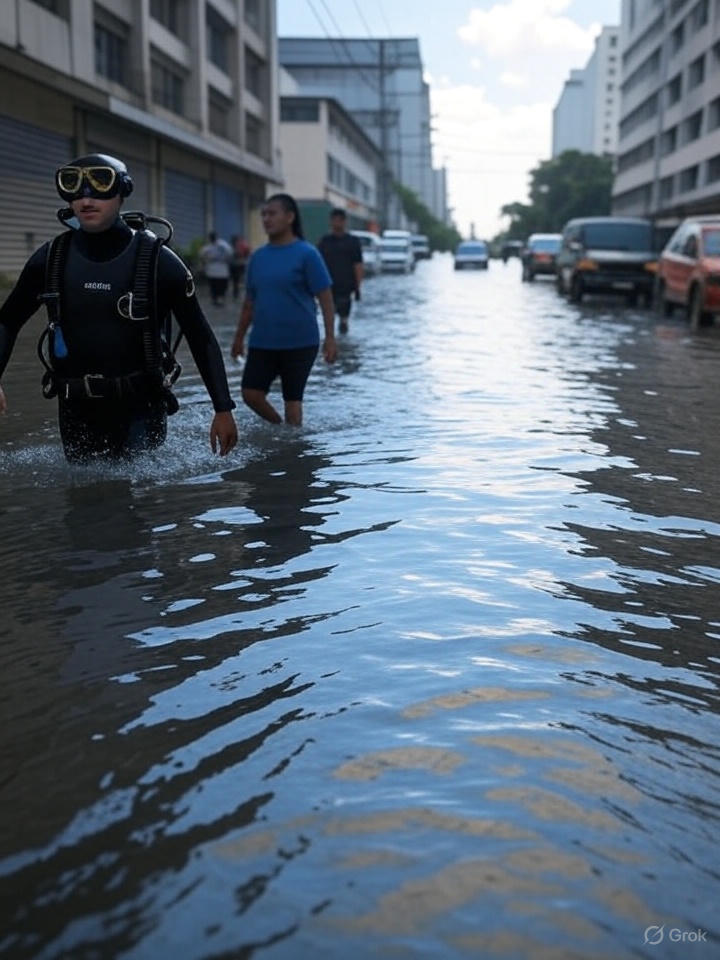
Growing up in the streets of Sampaloc, Manila, I’ve known rain and floods my entire life. In the 1970s, our small house on Blumentritt was no match for the relentless floodwaters that poured through our doors. I can still picture my parents, with three boys under five, navigating those traumatic times. How they managed, I’ll never fully understand.
Fast forward to today, and my family has moved to a higher part of the city, spared from the worst of the floods. Yet, during heavy monsoon rains or typhoons, flooding remains a fact of life in Manila. Low-lying streets like España Boulevard turn into rivers of filth and garbage, a sight so common it’s almost a rite of passage. They say you’re not a true Manileño until you’ve waded through murky waters to get to work or school. But how, in God’s green earth, is this still our reality?
Manila has transformed over the decades. Skyscrapers tower around my alma mater, UST, and commercial hubs line España and other major roads. We’ve seen technological marvels—electric toothbrushes, folding phones, electric vehicles, even AI reshaping the world. Yet, our capital city remains knee-deep in floodwater after every heavy rain. Why?
Manila’s geography is part of the problem. Nestled in a low-lying area, surrounded by the Pasig, Marikina, and San Juan rivers, and hemmed in by mountain ranges, the city is a natural basin for rainwater. During typhoons, rivers overflow, and water from higher elevations rushes down, overwhelming our outdated drainage systems. This isn’t new knowledge—my schoolbooks taught me this decades ago—but it doesn’t make the situation any less frustrating.
Floods disrupt lives. Impassable roads delay commutes, forcing parents like me to miss work or postpone critical meetings. It’s not just an inconvenience; it’s a toll on families striving to make ends meet. My children, now preparing for school, may soon trudge through the same floodwaters I did as a student. It feels absurd, doesn’t it?
The answer lies in a mix of systemic failures and human habits. Clogged canals and esteros, choked with garbage, exacerbate flooding. The Ecological Solid Waste Management Act of 2000 (RA 9003) mandates waste reduction, reuse, recycling, and proper disposal, with local government units (LGUs) tasked to enforce it. Yet, enforcement is spotty, and many of us, have been guilty of tossing a wrapper or neglecting to segregate waste. It’s easy to point fingers at politicians for neglecting drainage upgrades or mismanaging taxes, but we all share the blame.
Urban sprawl hasn’t helped. High-rise developments, often built without sustainable planning, replace absorbent ground with concrete, worsening runoff. Meanwhile, Manila’s population—over 13 million—strains infrastructure, with informal settlements along waterways adding to the challenge. Have we, as Manileños, failed? Or have we simply grown numb, accepting floods as an annual ritual?
This problem isn’t simple, or it would’ve been solved by now. But I believe change starts with small, collective actions. I’ve started using reusable water bottles to cut down on plastic waste, a tiny step to keep our streets and landfills less burdened. If every Manileño embraced proper waste segregation and disposal, we could unclog our waterways and ease flooding.
Our government must step up, too. The taxes we pay should fund modernized drainage systems, green infrastructure like permeable pavements, and robust flood control projects. LGUs need to enforce RA 9003 rigorously, establishing materials recovery facilities and penalizing non-compliance. Long-term urban planning, prioritizing resilience over profit, is critical.
Communities can lead the way. Barangay cleanups, school programs on waste management, and public advocacy can hold leaders accountable and foster civic pride. Imagine if solving flooding also eased Manila’s traffic and pollution—working together, we could transform our city.
I don’t have all the answers, but I know blaming (yes I did it earlier, shoot me) each other won’t help. Let’s reflect: How can I contribute? Whether it’s reducing waste, joining a cleanup, or demanding better from our leaders, every action counts. Manila may have learned to swim, but it’s time we learned to solve it. Let’s give our children a city where floodwaters are a memory, not a rite of passage.
Cleaner streets could ease traffic and reduce pollution, making Manila more livable. Every small action—whether it’s ditching single-use plastics, joining a barangay cleanup, or holding leaders accountable—makes a dent. I don’t have all the answers, but I know we can’t keep singing the same old rainy tune.
“It’s been raining in Manila, hindi ka ba nakikinig…” (out of tune, I know) no longer equates to that sinking—no pun intended—feeling of dread on our streets every time rains starts to fall around our beloved city.
 Jhun Raagas Experience
Leave a comment